
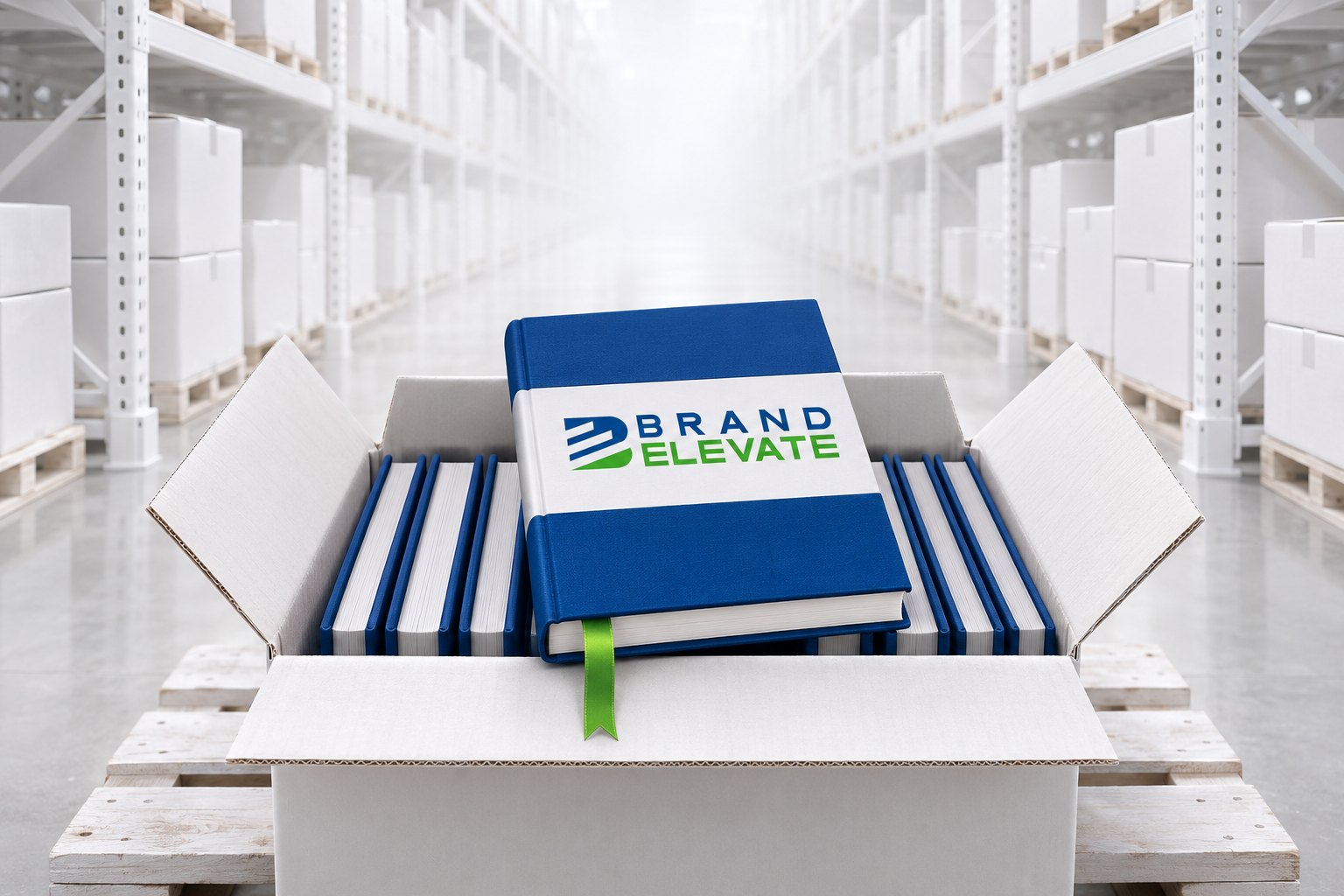
A book fulfillment service stores your books, packs each order and ships it to your reader, so you don’t have to. Orders flow in from your online store and a tracked parcel goes out.
The strongest setup is a printer that also fulfills, because a single company then answers for the book from the press to the reader’s door.
If your book sells a program, fills a funnel or goes out to clients, every late or damaged copy lands on your name. So before you sign, it helps to understand what these services do, what they cost, what goes wrong, and what to ask.
Key takeaways
- Book fulfillment means storing your books, packing each order and shipping it, usually through a link to your online store.
- You’ll meet general warehouses, print on demand platforms and printers that also fulfill.
- Compare the full cost of one book delivered, because a low pick-and-pack fee can hide a high total.
- Readers blame the author when a book goes missing, so ask who owns the problem before you sign.
What does a book fulfillment service do?

A book fulfillment service does the work between a reader clicking buy and the book reaching their door. It takes that work off your desk.
The fulfillment process normally works like this:
- Your books arrive at the warehouse, or they’re printed there.
- The company counts them and stores them.
- Your online store sends each new order to the company automatically.
- Someone picks the book, packs it in a mailer and prints the label.
- The parcel ships, and your reader gets tracking.
- You can see your stock levels and what shipped.
Fulfillment and distribution do different jobs. Distribution puts your book into bookstores and retailers, while fulfillment ships orders to the people who bought from you.
When does book fulfillment make sense?
Book fulfillment makes sense once packing starts eating your week. You can fulfill your own books, and some authors do it well, but the job grows faster than people expect.
The Alliance of Independent Authors interviewed Sacha Black about taking fulfillment in-house. Her setup took about a month of her time and a printing investment of about $12,000, and it grew into a rented room full of stock and a packer working four hours a day.
It paid off for her, but she was clear that it isn’t realistic for every author.
For an expert, the question is simpler. Your hours are worth more on sales calls and stage time than at a packing table, so outside help usually pays for itself once orders become steady.
What kinds of book fulfillment companies are there?
Most book fulfillment companies are general warehouses, print on demand platforms or printers that also fulfill, and the difference shows up when something goes wrong.
| General warehouse | Print on demand platform | Printer that also fulfills | |
|---|---|---|---|
| Who prints the book | Someone else | The platform | The same company |
| Stock | You send it in | None held | Held for you |
| Cost per book | Depends on your printer | Highest per copy | Lower, because you print in batches |
| Inserts and custom packaging | Sometimes | Limited | Usually yes |
| Who owns a problem | Often unclear | The platform’s support desk | One company |
A general warehouse can ship anything, which is both its strength and its weakness. Books are heavy, their corners dent, and a warehouse built for T-shirts may not pack them with much care.
Print on demand keeps your risk low because nothing is printed until someone orders. You pay more per copy for that, and you get less control over what goes in the parcel.
A printer that also fulfills can reprint before you run out, because the press and the stock sit in the same building. We’ve written more about why a single vendor matters.
How much does book fulfillment cost?
Book fulfillment pricing is a stack of small fees, and shipping is usually the biggest one. Typical US ranges for general fulfillment look like this.
| Fee | Typical range | When you pay it |
|---|---|---|
| Onboarding | $100 to $1,000+, or free with Brand Elevate | Once, at the start |
| Receiving | $5 to $15 per pallet | When stock arrives |
| Storage | $5 to $40 per pallet a month | Every month |
| Pick and pack | $1.50 to $3 per order | Every order |
| Shipping | Depends on weight and rate | Every order |
Treat those as a starting point, because every provider bundles them differently. Your book’s size and paper weight also change the postage, which our guide to paper for a printed book explains.
So ask each provider for the full cost of a single book delivered to a reader, which is the only fair way to compare quotes.
You also need that figure to set your shipping charge on a free-plus-shipping offer. Our guide to the book sales funnel covers how the book leads readers to your next offer.
What goes wrong with book fulfillment?

Late, damaged and missing books do the most harm to your name. The complaints repeat themselves, and they’re worth reading before you choose. These come from public reviews of fulfillment and printing companies.
Damaged books. “Books routinely arrive damaged and unsellable. Boxes are too big, no packing material.”
Nobody in charge. “There is no effective dedicated account manager taking ownership.”
Stock running out. “We’re currently sitting on hundreds of backorders for the third week in a row.”
Books that never come. This one came from a reader of a free-plus-shipping book, and the review went up on the book’s own page: “I placed an order in January and, as of April, I have still not received anything.”
That last one is the risk experts tend to miss. Your reader has never heard of your fulfillment company, so they blame you.
What to ask book fulfillment companies before you sign
A good provider will answer all of these without hesitating.
- What will one book cost me, delivered? Ask for the all-in figure.
- How do you pack books? You want a book-sized mailer, and a box with room to rattle is a bad sign.
- Who’s my contact? Get a name, and ask whether that person can see the warehouse.
- What happens when a book arrives late or damaged? Find out who pays for the replacement.
- How will you stop me running out? Ask how far ahead they warn you, and how fast they can reprint.
- Can you connect to my store? Ask which platforms they support and who sets it up. If you haven’t picked one yet, here’s our guide to the best platform to sell books.
- Can you add inserts? Offer cards and signed notes need a provider who’ll handle them. They’re part of the unboxing experience your reader remembers.
- Do you ship internationally? Check the rates before you promise anything on a sales page.
How does Brand Elevate handle book fulfillment?
We print, store and ship books from our own building in Murfreesboro, Tennessee, so nothing passes between companies on the way to your reader.
Our minimum order is 200 books. We connect to Shopify, WooCommerce and Amazon, and you can see your orders and stock levels as they move.
When you call, a person answers, and a shipping problem goes into a shared Slack channel with our team. If a shipment’s delayed, we reship it and we pay for it.
A client who runs a book through their funnel calls fulfillment “the smoothest part of my business.” Another said of the store connection, “Literally took me 5-10 minutes to get it set up.”
And Garrett White, founder of Wake Up Warrior, says this about our team on our testimonials page: “They have never been late, they’re always on time.”
Which book fulfillment provider should you choose?
Experts should choose the provider who’ll take responsibility from the press to the reader. If you’re selling a handful of books a month, you may not need a fulfillment company yet.
If your book sells something bigger, every copy that arrives on time is doing a job for you, but every one that doesn’t is a complaint with your name on it.
If you’d like that provider to be us, tell us about your book and we’ll send you a quote, or read more about our book printing and fulfillment.
FAQ
What fees do book fulfillment companies charge?
Expect a one-time onboarding fee, a monthly storage fee, a pick-and-pack fee of a few dollars per order, and postage on top. Providers bundle these differently, so ask each one for the full cost of a single book delivered and compare that number.
Do self-published authors need a fulfillment company?
They don’t need one at first. If you sell a few copies a month, packing them yourself or using print on demand is fine.
A fulfillment company earns its fee once orders are steady, or when you run a book funnel or ship to events and need the books to arrive on time.
What is the difference between book fulfillment and book distribution?
Book fulfillment ships orders directly to the people who bought from you. Book distribution places your book with retailers, wholesalers and libraries. Authors who sell through their own website or funnel need fulfillment, and authors who want to be on bookstore shelves need distribution.
Can a book fulfillment company ship internationally?
Many can, including us. International postage costs far more than domestic, so check the rates before you set your shipping charge. On a free-plus-shipping offer, it helps to set a separate international price so overseas orders don’t eat into your ad budget.
About the author: Mike Fredericks is the founder and CEO of Brand Elevate, a book printing and fulfillment company in Murfreesboro, Tennessee. Brand Elevate prints, stores and ships books for authors, speakers and experts, including ClickFunnels and Wake Up Warrior.